APT-C-60 Cyberattack Analysis and Cybersecurity Implications
/ 4 min read
Quick take - Recent research into the APT-C-60 cyberattack on a Japanese organization has provided valuable insights into the attack’s methodology and highlighted key implications for enhancing cybersecurity defenses against similar threats.
Fast Facts
- APT-C-60 Attack Analysis: Research focused on the malware infection flow, downloader mechanisms, backdoor access, and contextualizing the attack within similar cyber campaigns.
- Social Engineering Defense: Emphasizes the need for organizations to strengthen defenses against social engineering tactics, which played a key role in the attack.
- Legitimate Service Exploitation: Highlights the importance of monitoring legitimate services, as attackers used platforms like Bitbucket and StatCounter to facilitate the attack.
- Cross-Border Collaboration: Advocates for improved international threat intelligence sharing to enhance collective cybersecurity responses.
- Future Cybersecurity Initiatives: Suggests enhancing phishing detection, monitoring legitimate service behavior, and improving incident response training to better combat sophisticated cyber threats.
APT-C-60 Attack: Unveiling the Methodology and Implications for Cybersecurity
Recent research into the APT-C-60 cyberattack, which targeted a Japanese organization, has provided critical insights into the attack’s methodology. This analysis is pivotal for understanding the broader implications for cybersecurity. By dissecting the malware infection flow and examining the tools and techniques used by attackers, researchers aim to bolster defenses against similar threats in the future.
Key Findings of the APT-C-60 Attack
The comprehensive examination of the APT-C-60 attack focused on four main components:
-
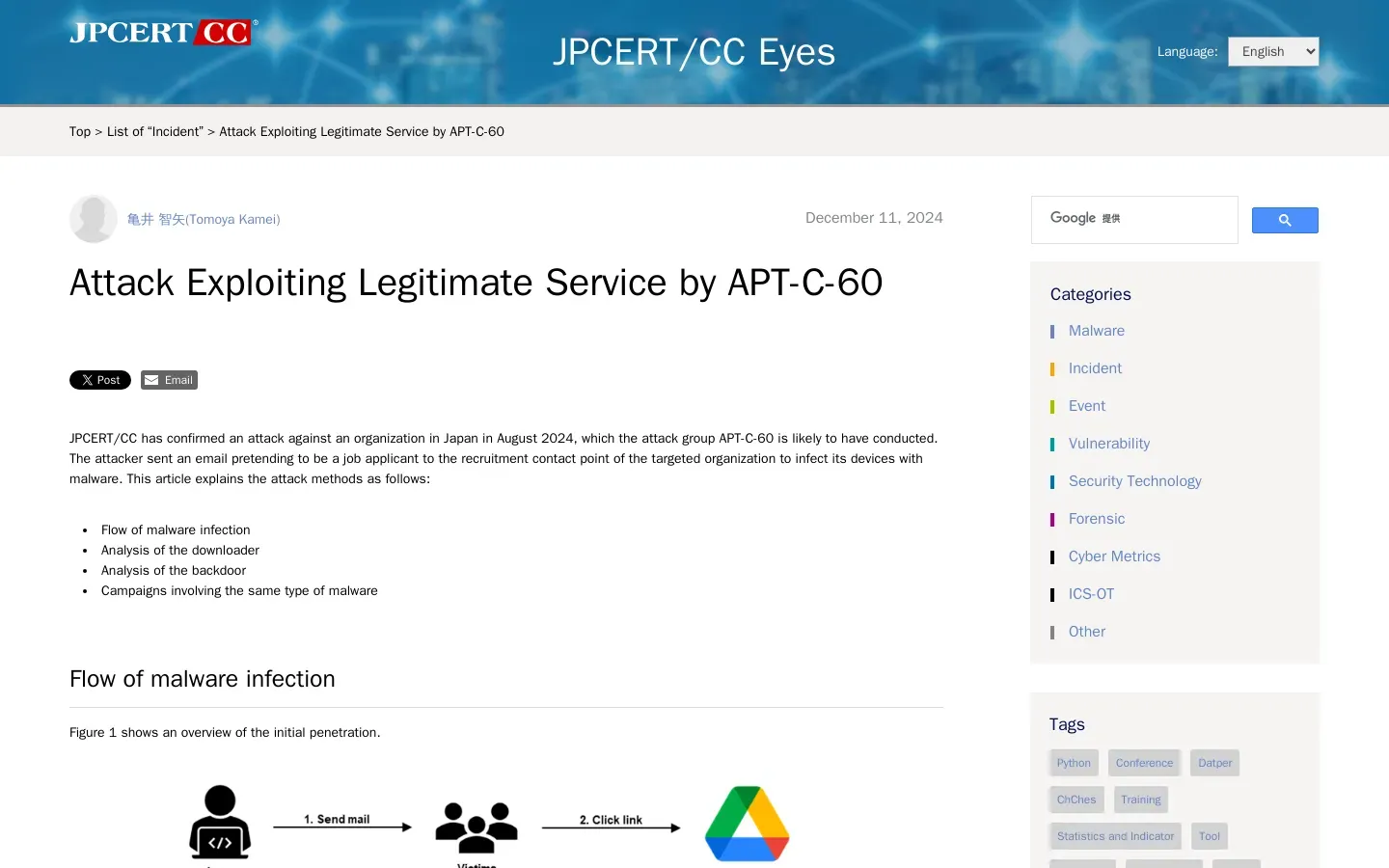
Flow of Malware Infection: Researchers meticulously mapped out the sequence of events that led to the successful infiltration of the organization. This understanding is crucial for developing strategies to prevent similar breaches.
-
Analysis of the Downloader: The investigation revealed how the initial entry point of the malware was established and distributed. This step is often critical in understanding how attackers bypass initial security measures.
-
Backdoor Analysis: The study evaluated mechanisms that allowed attackers to maintain persistent access to compromised systems. Persistent access is a hallmark of sophisticated cyberattacks, allowing prolonged exploitation.
-
Campaigns Involving Similar Malware: By contextualizing this attack within a larger framework of similar campaigns, researchers identified trends and tactics that could inform future defense strategies.
Implications for Cybersecurity
The findings from this research have significant implications for cybersecurity:
-
Increased Focus on Social Engineering Defense: The attack underscored the importance of defending against social engineering tactics, which were pivotal in this incident. Organizations must enhance training and awareness programs to mitigate these risks.
-
Legitimate Service Abuse Awareness: The use of platforms like Bitbucket and StatCounter highlights the need for vigilance regarding legitimate services that can be exploited by attackers. Monitoring these services is essential for early detection of malicious activities.
-
Malware Persistence Techniques: Sophisticated methods employed by attackers to ensure ongoing access necessitate improved detection and mitigation strategies. Understanding these techniques can help in developing more robust defenses.
-
Cross-Border Threat Intelligence Sharing: Enhanced collaboration across borders is crucial for sharing threat intelligence and improving collective response efforts against cyber threats.
Strengths and Limitations of the Research
The research is notable for its detailed analysis and practical relevance. However, it also reveals limitations, such as the need for further investigations into specific tools and techniques utilized by APT-C-60 and their variants. Understanding these elements will be crucial for developing more robust cybersecurity measures.
Tools and Techniques Explored
Key tools and methodologies identified in the analysis include:
-
VHDX File Format: Researchers explored how this file format was leveraged in malware deployment, providing insights into unconventional methods used by attackers.
-
COM Hijacking: The use of COM hijacking techniques to manipulate legitimate processes was examined, highlighting a sophisticated method of evading detection.
-
Base64 Encoding and XOR Encryption: These encoding methods were analyzed to understand how they obscure malware payloads, complicating detection efforts.
-
Use of Legitimate Services: Recognizing how trusted services were exploited underscores the need for vigilance in monitoring such platforms.
Future Directions
The research outlines several areas for future focus:
-
Enhanced Phishing Detection Mechanisms: Collaboration with email service providers to implement advanced detection systems could intercept malicious emails before they reach users.
-
Behavioral Analysis of Legitimate Services: Developing methods to analyze and monitor legitimate services’ behavior could aid in identifying unusual activity indicative of an attack.
-
Incident Response and Forensics Training: Strengthening training programs for incident response teams will better prepare them for real-world scenarios involving sophisticated attacks like APT-C-60.
The APT-C-60 attack serves as a crucial case study in understanding modern cyber threats. The insights gained not only inform current cybersecurity practices but also pave the way for future innovations in defense strategies. By addressing identified implications and focusing on suggested areas for improvement, organizations can better safeguard themselves against an evolving landscape of cyberattacks.